What Is Wrapped Inside
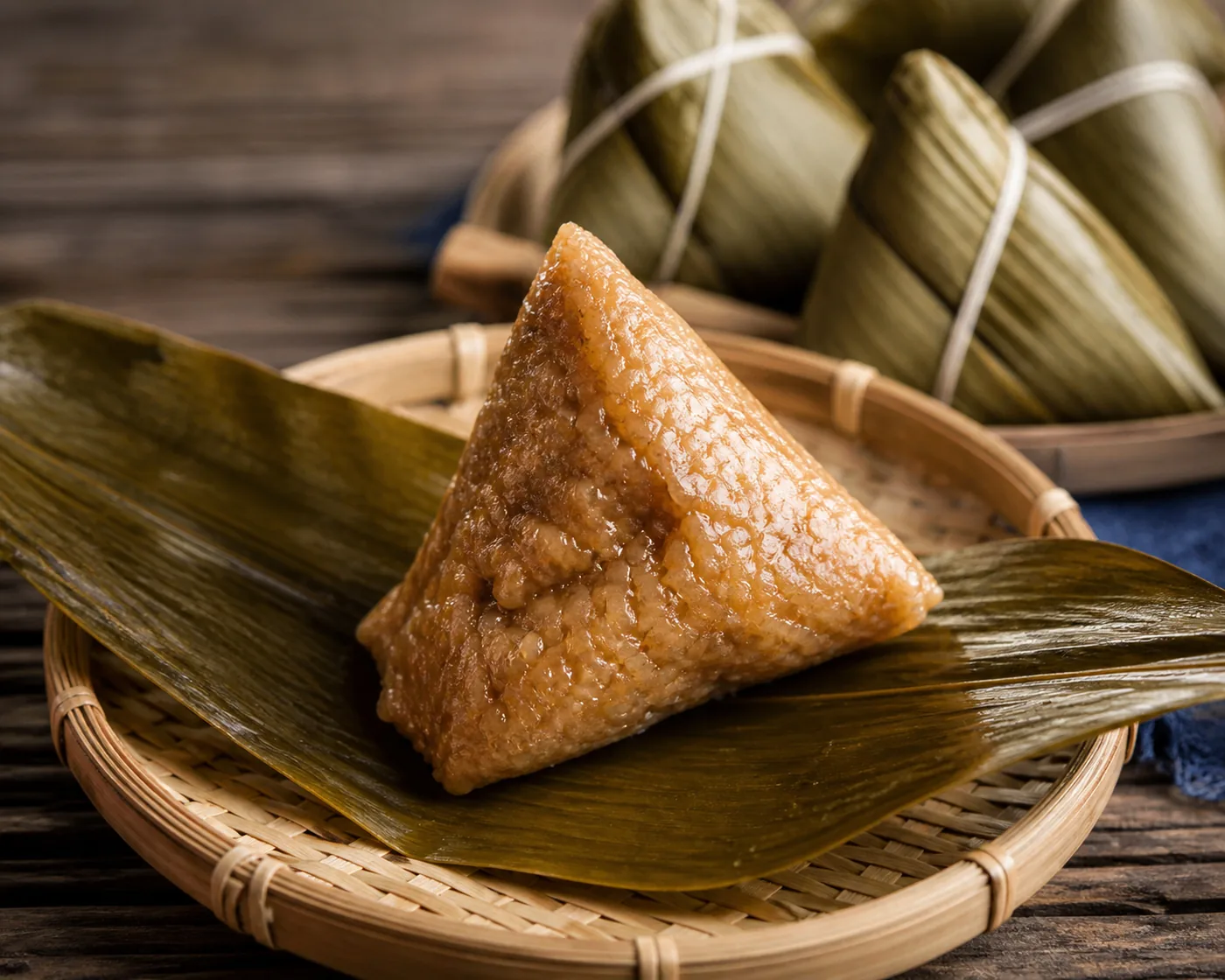
Bak Chang (肉粽, bah tsang in Hokkien) is a pyramid-shaped dumpling of glutinous rice packed with savoury fillings (braised pork belly, salted egg yolk, dried shrimp, chestnuts, mushrooms) all wrapped tightly in dried bamboo leaves and boiled for hours until the rice becomes dense, dark, and deeply flavoured by everything inside it. Unwrapping one is a small ritual in itself: you cut the string, peel back the leaves one by one, and the compressed rice pyramid sits in your hand, warm and perfect, smelling of bamboo and five spice and something that is impossible to separate from the memory of whoever made it for you first.
In Malaysia, Bak Chang is most associated with the Dragon Boat Festival (端午节, Duān Wǔ Jié), which falls on the fifth day of the fifth lunar month, usually in June. But the reality is that Bak Chang is eaten throughout the year, made in large batches by grandmothers who wake before dawn to begin soaking the rice and rendering the pork, and shared with family and neighbours as a matter of course. The festival is the occasion; the making is a year-round expression of love.
The Story Behind the Festival
The Dragon Boat Festival commemorates the death of Qu Yuan (屈原), a loyal poet-minister of ancient China who threw himself into the Miluo River in 278 BC after the state he had served was conquered. According to legend, the people who loved him paddled out in boats to drive away the fish with drums and noise so that his body would not be eaten. They threw rice dumplings into the water to feed the fish and keep them from his body. This is the origin story of both the dragon boat races and the dumplings, a dual act of preservation and mourning that the Chinese have maintained for over two thousand years.
Whether or not the historical Qu Yuan was precisely as described, the story has given the festival its emotional texture: a celebration that contains grief, loyalty, and the stubborn human instinct to honour those who died for something they believed in. When you eat a Bak Chang on the fifth of the fifth month, you are participating, however lightly, in that long memory.
How Malaysian Bak Chang Is Different
The Bak Chang made in Malaysian Chinese households has evolved considerably from its Chinese originals. The Hokkien version, the most common in Malaysia, is large, dense, and richly savoury, packed with fatty pork, whole chestnuts, and a salted egg yolk that oozes into the rice when you bite through it. The Cantonese version tends to be lighter and more delicately flavoured, sometimes with a sweet filling of red bean or lotus paste on one side. The Nyonya Chang, made in Baba Nyonya households, is fragrant with blue butterfly pea flower rice and a sweet-savoury filling of candied winter melon and minced pork, a distinctly Malaysian invention.
Each dialect group and family has its own proportion of fat to lean in the pork, its own choice of dried shrimp or dried oyster, its own secret seasoning for the glutinous rice. The differences are small enough that an outsider might not notice them, but they are large enough that a Malaysian Chinese person can usually tell, from the taste alone, roughly where the person who made this grew up.
Hokkien-Style Bak Chang
- 1 kg glutinous rice, soaked overnight
- 3 tbsp dark soy sauce
- 2 tbsp oyster sauce
- 1 tbsp sesame oil
- 1 tsp five-spice powder
- Salt to taste
- 40–50g braised pork belly, cubed
- 1 salted egg yolk
- 2–3 dried shrimp, soaked and fried
- 1 dried shiitake mushroom, soaked & braised
- 1–2 roasted chestnuts
- 1 tbsp shallot oil
- 40–50 dried bamboo leaves, soaked overnight
- Hemp twine or raffia string
- The day before: soak glutinous rice overnight. Soak dried bamboo leaves in warm water for at least 4 hours until pliable. Braise pork belly in dark soy, oyster sauce, five-spice, and sugar until tender. Set aside.
- Drain the soaked rice and season with dark soy, oyster sauce, sesame oil, five-spice, and shallot oil. Mix well until the rice is evenly coated and deep brown.
- To wrap: take two bamboo leaves and form them into a cone. Add 2 tablespoons of seasoned rice into the cone. Press a hollow in the centre and add one each of the filling ingredients. Cover with another 2 tablespoons of rice, pressing firmly.
- Fold the leaves over the rice to form a tight pyramid shape. Secure with string, wrapping firmly around all three sides.
- Place the wrapped dumplings in a large pot of boiling water. Boil for 3 to 4 hours, keeping the water level above the dumplings throughout. Top up with boiling water as needed.
- Remove and hang to dry for 15 minutes before serving. Can be refrigerated for up to one week and reheated by steaming or brief boiling.
The Making as the Thing
In many Malaysian Chinese families, the making of Bak Chang is a communal event that happens in the days before the Dragon Boat Festival. Several women of the household (sometimes joined by neighbours or extended family) gather in the kitchen or under a covered porch, each person assigned a task: soaking leaves, braising pork, seasoning rice, wrapping. The wrapping itself is a skill that takes years to develop; a good dumpling must be tight enough that the rice does not loosen during boiling, but shaped cleanly so the pyramid is even and firm.
Children who grow up in these households carry the smell of boiling bamboo leaves as a sense-memory for the rest of their lives. The smell of a Bak Chang cooking is the smell of the fifth lunar month, the smell of aunties in the kitchen, the smell of patience and abundance and care made tangible. You cannot buy that in a shop. The mass-produced Bak Chang sold in markets are perfectly serviceable. But the ones made in someone's kitchen, wrapped by hand, boiled in a pot that has been watched all afternoon: those ones mean something else entirely.