A Cake That Carries the Moon
The mooncake (月饼, yuèbǐng) is one of the most recognisable foods in the entire Chinese culinary tradition. Dense, intricate, and deeply symbolic, it is made and gifted in the weeks leading up to the Mid-Autumn Festival (中秋节, Zhōngqiū Jié), the 15th day of the 8th lunar month, when the moon is at its fullest and brightest.
In Chinese Malaysian communities, store-bought mooncakes have become the norm; elaborate gift boxes are exchanged between families, colleagues, and friends throughout September. But the tradition of making mooncakes at home, by hand, with family gathered around the kitchen table, belongs to the Cantonese heritage of the community and is still practised in many households today.
What Makes a Mooncake
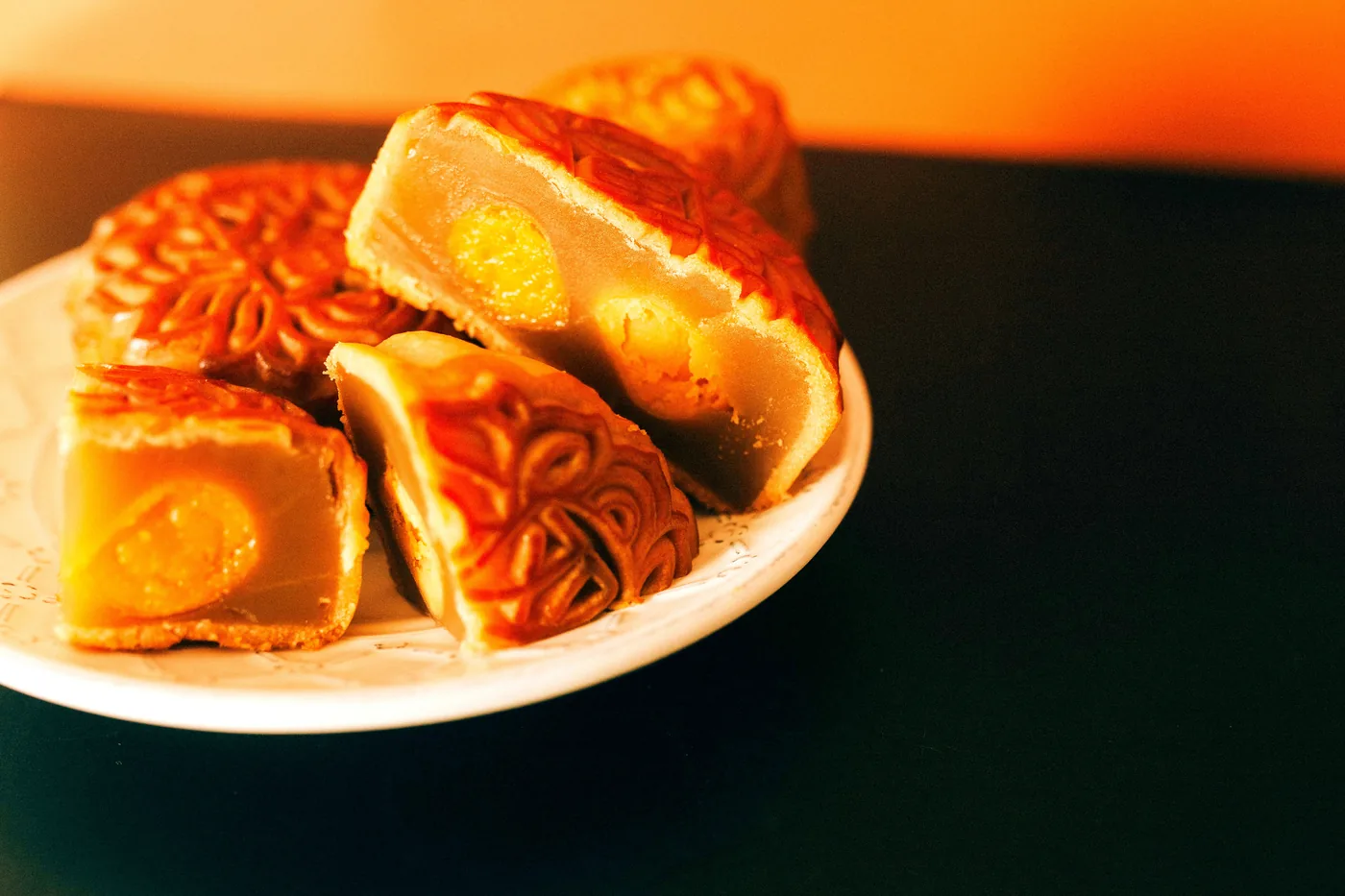
A traditional Cantonese-style mooncake consists of a thin, golden-baked skin wrapped around a dense, sweet filling, most classically lotus seed paste (莲蓉, lián róng) or red bean paste (红豆沙, hóngdòu shā), with one or two salted egg yolks in the centre representing the full moon.
The mooncake is pressed into a wooden or plastic mould that imprints intricate patterns and Chinese characters onto the surface: typically the words 中秋 (Mid-Autumn), 月饼 (mooncake), or the bakery or family name. The act of pressing and releasing the mould is the most satisfying moment of the entire process.
Traditional Fillings
The Heritage Food: Traditional Baked Mooncake Skin
This recipe covers the baked pastry skin. Lotus paste can be homemade or purchased ready-made from Chinese grocery stores. Makes approximately 8 mooncakes (75g mould size).
- 100g golden syrup (糖浆)
- 35ml vegetable oil
- ½ tsp lye water (碱水, jiǎn shuǐ), available at Chinese grocery stores
- 140g plain flour, sifted
- 40g lotus seed paste or red bean paste
- 1 salted egg yolk (optional but traditional)
- 1 egg yolk mixed with 1 tbsp milk
- Make the dough: Mix golden syrup, oil, and lye water together. Add sifted flour and mix until a soft dough forms. Do not overwork. Wrap and rest for 30 minutes.
- Prepare fillings: If using salted egg yolks, bake them at 180°C for 8 minutes until just set. Wrap each yolk in a ball of lotus paste (40g). Set aside.
- Portion the dough: Divide the rested dough into 8 portions of about 25g each. Flatten each portion into a thin disc using your palm.
- Wrap: Place a filling ball in the centre of each disc. Gently stretch the dough up and around the filling, pinching to seal. Roll between palms to smooth.
- Mould: Dust the mooncake mould lightly with flour. Place the filled ball into the mould and press firmly. Tap the mould on the counter and press the release lever or lift to release. Repeat.
- First bake: Place mooncakes on a lined baking tray. Bake at 180°C for 10 minutes. Remove and cool for 10 minutes.
- Egg wash and second bake: Brush lightly with egg wash (do not pool it in the pattern grooves; use a light hand). Return to oven for 10–12 more minutes until golden brown.
- Rest before eating: Allow mooncakes to cool completely, then store in an airtight container for 1–2 days before serving. The skin softens and becomes glossy over time; this is called 回油 (huí yóu), "oil return." Do not skip this step.
- Lye water is essential: it gives the skin its characteristic golden colour and tender texture. It is not optional.
- Do not eat the mooncakes immediately: the 回油 resting period is what separates a good mooncake from a great one
- Mooncake moulds come in many patterns; wooden moulds give the sharpest imprints
- Homemade mooncakes keep for up to 5 days at room temperature, 2 weeks refrigerated
The Gifting Tradition
Mooncakes are never just food; they are currency. In the weeks before Mid-Autumn, families send boxes of mooncakes to relatives, employers, business partners, and close friends. The quality of the box (its packaging, the brand, the filling varieties) communicates care and respect. Receiving mooncakes from someone is a gesture of relationship maintenance.
Children carry paper lanterns through the neighbourhood on Mid-Autumn night while adults sit outdoors under the full moon, eating mooncake slices and drinking Chinese tea. The mooncake is cut into wedges so everyone at the table shares from the same cake, another layer of the reunion symbolism embedded in everything round.