Born in Malaysia
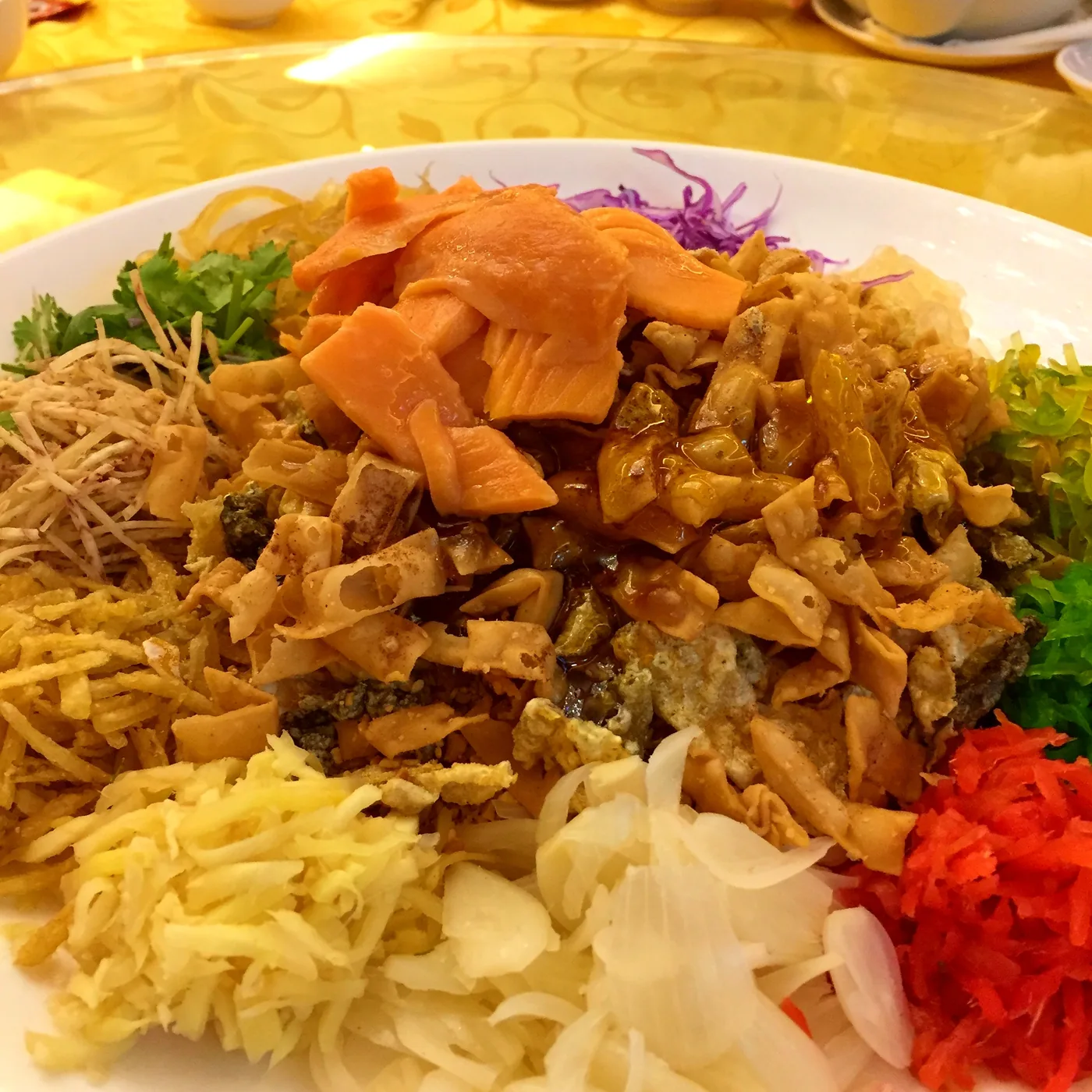
Yee Sang (鱼生, also spelled Lou Sang or Loh Sang) is the dish that no Chinese New Year reunion dinner in Malaysia can begin without, a vast, colourful salad of raw fish, julienned vegetables, crackers, and a plum sauce dressing, tossed together at the table by everyone present with chopsticks raised as high as possible above the plate. It is festive, chaotic, delicious, and, crucially, an invention that belongs specifically to Malaysia and Singapore.
Despite its ancient-sounding name and elaborate ritual, Yee Sang in its current form was created in the 1960s by four Cantonese chefs working in Kuala Lumpur, who adapted a much simpler Cantonese raw fish dish into something more elaborate and theatrical for the new year market. The toss, the blessings, the specific ingredients and their meanings: all of this was developed here, in this country, by Chinese Malaysians who were building their own culture out of the materials available. It is perhaps the clearest example in the Malaysian Chinese culinary tradition of a local invention that has since been embraced so completely that it now feels ancient.
The Ritual of the Toss
The dish is assembled at the table in a specific sequence. Each ingredient is added with a corresponding blessing, called out in Cantonese by the server or a designated family member. Raw salmon or yee fish (raw carp) goes in first, symbolising abundance and surplus. Then come the julienned carrots, radish, and green papaya; the shredded ginger and kaffir lime leaves; the pomelo segments; the five-spice powder and pepper; the sesame seeds and peanuts; the deep-fried flour crisps; and finally the plum sauce and sesame oil, poured in circles over everything.
Then comes the toss. Everyone at the table stands, raises their chopsticks, and lifts the salad as high as they can, the higher the toss, the greater the prosperity in the year ahead, at least by the logic of the occasion. Everyone calls out "Lou Hei!" (捞起, "toss up!") and the wishes follow: 年年有余 (abundance every year), 万事如意 (may all go as you wish), 生意兴隆 (may business flourish). The salad collapses back onto the plate in a cheerful heap. Then everyone eats it, which is, frankly, also very good.
The Ingredients and Their Meanings
Every ingredient in Yee Sang has been assigned a symbolic meaning, a layer of intention that transforms an ordinary salad into a collective statement of hope. The interpretations overlap and sometimes vary by restaurant or family, but the general vocabulary is consistent across Malaysian Chinese communities.
Yee Sang: Prosperity Toss Salad
- 200g fresh salmon, thinly sliced (余: abundance)
- 1 cup shredded white radish (步步高升: advancement)
- 1 cup shredded carrot (鸿运当头: good fortune)
- ½ cup shredded green papaya (青春常驻: eternal youth)
- ½ cup pomelo segments (大吉大利: great luck)
- ¼ cup pickled ginger, sliced (招财进宝: welcoming wealth)
- 2 kaffir lime leaves, finely shredded (万紫千红: colourful blessings)
- 3 tbsp roasted sesame seeds (金银满屋: house full of gold)
- 3 tbsp crushed roasted peanuts (金银满屋: golden nuggets)
- 1 cup deep-fried flour crisps (满地黄金: ground covered in gold)
- 1 tsp five-spice powder (五福临门: five blessings arrive)
- 1 tsp white pepper (招财进宝: attract wealth)
- 4 tbsp plum sauce
- 2 tbsp sesame oil
- 1 tbsp lime juice
- 1 tsp sugar (optional)
- Arrange the salmon slices in the centre of a large round platter.
- Fan the shredded radish, carrot, and green papaya in coloured sections around the fish.
- Add pomelo segments, pickled ginger, and shredded kaffir lime leaves over the top.
- Sprinkle on the five-spice powder and white pepper, followed by the sesame seeds and crushed peanuts.
- Scatter the deep-fried flour crisps generously over everything: they should cover most of the salad.
- Mix the plum sauce, sesame oil, and lime juice together and pour over in a circular motion.
- Bring to the table. Have everyone stand, raise their chopsticks, and toss together while calling out their wishes, as high as possible. Then eat.
A Tradition That Grew Into Itself
The fact that Yee Sang was invented relatively recently, and in Malaysia, does not make it less of a tradition. It makes it a living example of how traditions form, not only through the accumulation of centuries, but through the deliberate choices of communities to build meaning into their celebrations. The four chefs who developed modern Yee Sang were doing what generations of Chinese Malaysians have always done: taking what they knew, adapting it to the place and time they found themselves in, and offering it back to the community as something shared.
Today, Yee Sang is found from the most lavish hotel restaurant to the most modest home kitchen. Some families assemble it from scratch with fresh vegetables and home-made plum sauce. Others use the pre-packaged kits sold in every supermarket starting from January. The form varies. The toss is the same. The table full of people with their chopsticks raised, calling out their hopes for the year: that part does not change.